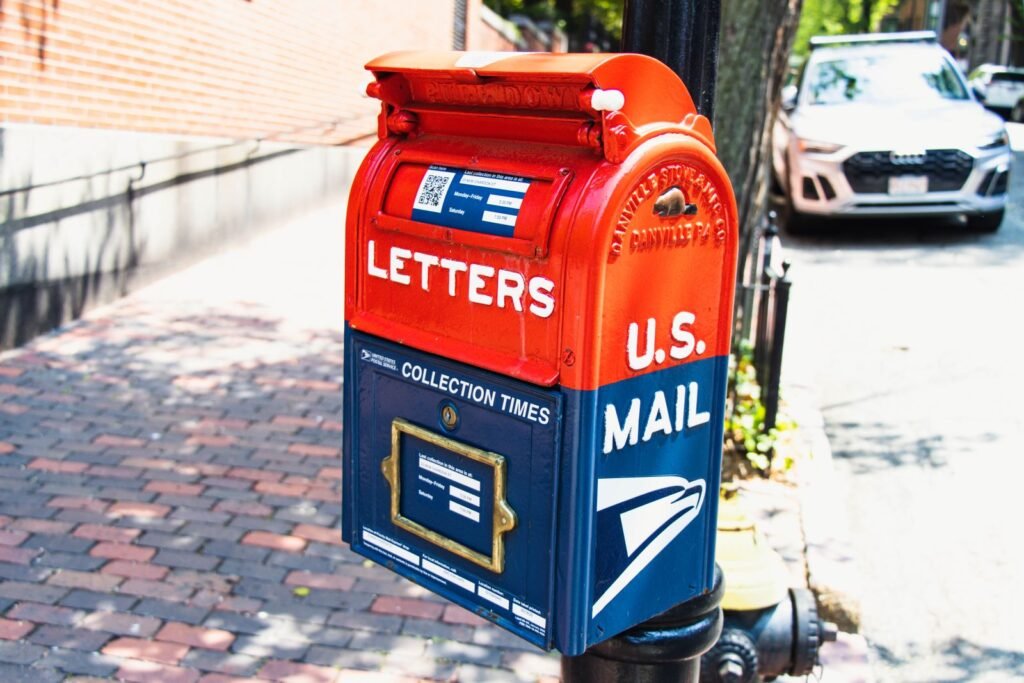
USPS does not reject mail on a whim — it follows published rules about size, weight, shape, and addressing, and mail that breaks them gets surcharged, delayed, or returned. This center translates those rules into plain language for people mailing letters and cards: the exact letter size and weight limits, how to address an envelope so machines and carriers read it correctly, when a greeting card needs extra postage (square and embellished cards are the usual traps), and how postage is calculated for large envelopes and flats. Every rule stated here is drawn from official USPS publications, which we cite in each guide and collect on our Sources & References page.
Most readers arrive here because something already went wrong, or because they can see it about to. A batch of square wedding-style envelopes is sitting on the table and a friend has mentioned a surcharge. A card came back with a yellow sticker and no clear explanation. A document envelope is bigger than a letter and heavier than a card, and nobody at the kitchen table knows what it costs. Or a sender is designing a mail piece — a photo card, a thick announcement, a large envelope of papers — and wants the limits before money is spent printing it. This center is organized so each of those situations has exactly one guide that owns it: size and weight, addressing, extra postage, and large envelopes. Find the rule that governs your envelope, and the price follows from it.
Key Takeaways
- Letter limits: 5 to 11.5 inches long, 3.5 to 6.125 inches high, 0.007 to 0.25 inches thick, and up to 3.5 ounces in weight.
- Square, rigid, clasped, or unevenly thick pieces are nonmachinable: the surcharge is $0.49, so a one-ounce square card costs $1.31 total.
- Large envelopes (flats) start at $1.69 for one ounce and can measure up to 15 × 12 × 0.75 inches; First-Class carries them up to 13 ounces.
- The delivery address goes in the center of the envelope and your return address in the upper-left corner — apartment and suite lines are the lines most often misplaced.
- For any batch that matters, have one finished sample envelope weighed and checked at the counter before the rest are stamped.
Start Here
USPS Letter Size and Weight Requirements is the foundation: the dimensions, thickness, weight, and flexibility rules a piece of mail must meet to travel as a letter at letter prices. If you understand this one guide, the rest of the center falls into place, because every surcharge and reclassification elsewhere in these pages is measured against it.
The Rules, One at a Time
- How to Address an Envelope in the USA — delivery address format, return address placement, apartment and suite lines, and the common formatting errors that slow mail down. It follows the format USPS sorting equipment reads best, line by line.
- Do Greeting Cards Need Extra Postage? — square cards, rigid cards, cards with clasps or wax seals, and other nonmachinable cases that require a surcharge. If you buy embellished or unusually shaped cards, read this before you buy stamps.
- How to Calculate Postage for Large Envelopes — flats and large envelopes: how they are classified, weighed, and priced, step by step. It works through examples from a single document envelope up to the heaviest First-Class flat.
Machinable vs. Nonmachinable, in Plain Terms
One distinction runs through several guides in this center and is worth understanding on its own. Most letters are processed by machines that bend, scan, and sort them at high speed. Mail that fits the letter size range, is flexible and evenly thick, and is addressed in the standard format travels as “machinable” at the base letter price. Mail that is square, rigid, unusually thick in one spot, or closed with clasps or other protrusions cannot run through the machines the same way — it is “nonmachinable” and carries a surcharge, even when it is light. Neither category is prohibited; the rules simply price the extra handling. Checking your card against the nonmachinable list before you buy stamps is the easiest surcharge to avoid.
How We Handle Rule Changes
Postal rules and prices change, and USPS announces those changes officially. The guides in this center are checked against current USPS sources, and each states its facts as of its last review. When a rule affects a mailing deadline or a price, we cite the specific USPS page rather than summarizing from memory — and we never present an estimate or a recommendation as an official USPS rule.
Who This Center Is For
Senders whose mail is slightly unusual — oversized Christmas cards, square invitations, thick photo-card envelopes, large envelopes with documents — and anyone who has had mail returned and wants to know which rule it broke. For most standard cards, the postage-counting answers live in Postage & Stamp Guides; for preparing ordinary holiday mail, see Holiday Mailing Guides.
Common Questions This Center Answers
- How big and heavy can a letter be?
- Where do the addresses go on an envelope, exactly?
- Why did my square Christmas card need extra postage?
- How is postage figured for a large envelope?
Quick Answers
How big and how heavy can a letter be? A letter can measure up to 11.5 inches long, 6.125 inches high, and a quarter inch (0.25 in) thick, and it can weigh up to 3.5 ounces. Below the minimums — 5 inches long, 3.5 inches high, 0.007 inches thick — a piece is too small to mail as a letter at all. Anything bigger than the maximums is priced as a large envelope or a package instead.
Why did my square Christmas card need extra postage? Because square envelopes cannot run through sorting machines the standard way, they are classed as nonmachinable and carry a $0.49 surcharge. The math for a one-ounce square card is $0.82 for the ounce plus $0.49 — $1.31 total. Rigid pieces and envelopes with clasps, buttons, or uneven thickness fall under the same surcharge.
How much does a large envelope cost to mail? Large envelopes — called flats — start at $1.69 for the first ounce, priced by weight from there. A flat can measure up to 15 by 12 inches and three-quarters of an inch thick, and First-Class service carries flats up to 13 ounces; past that weight, the piece moves to package services.
Where exactly do the addresses go? The delivery address goes in the center of the envelope, with the recipient’s name first, then the street address, then city, state, and ZIP on the last line; your return address goes in the upper-left corner. A correctly stacked example, of the kind we use throughout this site: JAMES MILLER, 123 PEACHTREE ST NE, ATLANTA GA 30303. The addressing guide gives the full format, including apartment and suite lines, which are the lines most often placed wrong.
How to Use This Section
Use this center as a reference bench, not a cover-to-cover read. When a piece of mail is in front of you, start with the size and weight guide to classify it — letter or flat, machinable or not — because classification decides which of the other guides applies. Then check the extra-postage guide if anything about the piece is unusual, and the addressing guide before the envelope is sealed. One practical tip from the world of returned mail: if a batch matters — a hundred invitations, a company’s holiday mailing — take one finished sample to the post office counter and have it weighed and checked before the rest are stamped. Two minutes at the counter is cheaper than a hundred surcharges.
Editor’s note from Atlanta — James Miller: The rule questions I hear in Atlanta almost always start with a purchase, not a problem: someone has fallen for beautiful square cards, or thick photo-card envelopes with a clasp, and a friend has whispered the word “surcharge.” In my commercial mail years, this was the single most common avoidable cost I saw — not fraud or error, just a design chosen before anyone checked the rules it would travel under. The fix is unglamorous and completely reliable: finish one sample envelope, exactly as it will mail, and have it weighed and measured before you buy postage for the batch. A concrete example I give neighbors: an envelope addressed from a Peachtree Street apartment to family in Chicago is an ordinary letter at $0.82 until the moment it becomes square or rigid — then it is $1.31, every time, no exceptions for good intentions. Learn the shape of the rules once, and you will spot a surcharge at the card-shop shelf instead of at your own mailbox in December.
Related Centers
- Postage & Stamp Guides — turning rules into stamp counts.
- Holiday Mailing Guides — applying the rules to your holiday mailing.
- Mailing Timeline & Planning — official dates and deadlines.
About the author — James Miller is a retired U.S. Postal Service employee whose career was in commercial mail, where he helped businesses prepare and send large-volume mailings. He edits Buy Holiday Stamps from Atlanta, Georgia. More about James and this site.
Last fact-checked against official USPS sources: November 2, 2026.